
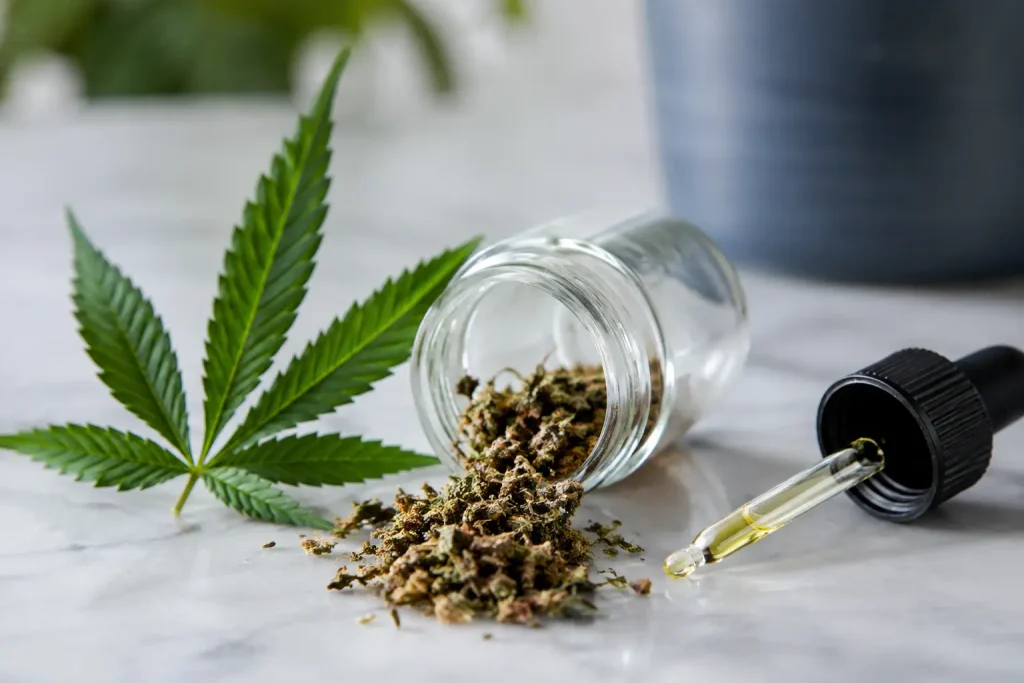
A package may use terms such as herbal incense, potpourri, liquid incense, or K2, but synthetic cannabinoids are not a predictable version of cannabis. They are human-made chemicals that can act on the same brain receptors as THC, often with far stronger and less predictable effects. That gap between the label and the actual contents is where serious risk begins.
Why synthetic cannabinoids are different
Natural cannabis contains a mix of compounds, including THC and CBD, whose effects and risks are still variable from person to person. Synthetic cannabinoids are a broad, changing class of laboratory-made substances. Some may bind more intensely to cannabinoid receptors than THC, which can produce effects that are abrupt, overwhelming, and difficult to anticipate.
The name on a pouch, paper, bottle, or product listing does not reliably identify the chemical involved. Products sold under similar branding can contain different substances from one batch to the next. A formula can also change without clear notice. For a buyer, that means prior experience with a product name does not establish what a new package contains or how it may affect the body.
Packaging and potency claims are not proof of safety
Premium-looking packaging, a familiar label, or a stated strength can create a false sense of certainty. In this category, appearance is not laboratory verification. Even when a seller makes purity or testing claims, consumers should understand what was tested, when it was tested, whether the report matches the exact batch, and whether the test covered contaminants as well as the primary compound.
A major concern is uneven distribution. When chemicals are applied to plant material, paper, or another carrier, one area may contain far more active material than another. This makes dose difficult to predict. A small amount can have a dramatically different effect than expected, particularly for someone with no prior exposure, a lower tolerance, an underlying health condition, or other substances in their system.
The practical trade-off is simple: convenience, branding, and discreet presentation do not reduce chemical uncertainty. The more the product’s origin, ingredients, and batch documentation are unclear, the less a buyer can make an informed safety decision.
Effects can become a medical emergency fast
Synthetic cannabinoid reactions range from anxiety, confusion, agitation, nausea, and rapid heart rate to more severe symptoms such as chest pain, seizures, hallucinations, loss of consciousness, and dangerously high body temperature. Some people experience intense panic or disorientation that leads to accidental injury. Others may become severely sedated or unresponsive.
Risk rises when substances are mixed with alcohol, prescription medications, stimulants, opioids, or other drugs. It can also rise for people with heart disease, mental health conditions, a history of seizures, or pregnancy. There is no reliable way to predict who will have a mild reaction and who will have a life-threatening one.
If someone has chest pain, trouble breathing, a seizure, extreme agitation, fainting, or cannot be awakened after using a suspected synthetic cannabinoid, call 911 immediately. Do not leave them alone, do not encourage them to drive, and do not assume sleep will solve the problem. If it is safe to do so, keep any packaging available for medical professionals, but prioritize emergency care over identifying the product.
Legality can change faster than a product label
Synthetic cannabinoids are also a legal risk, not just a health risk. Laws vary by state and can change as new chemical variations appear. A label stating “not for human consumption” does not automatically make a product lawful, safe, or exempt from regulation. Possession, sale, distribution, or importation may carry serious consequences depending on the substance and location.
For retailers and distributors, this uncertainty creates additional exposure. Product names and marketing categories are not a substitute for verified legal review, accurate records, and compliance with applicable federal, state, and local requirements. A buyer’s expectation of privacy does not change the legal status of a substance.
Make the safest decision with clear information
The most responsible approach is to avoid using products when the ingredients, batch, legal status, or risks cannot be independently confirmed. If you are worried about your own use or someone else’s, a doctor, poison control center, or substance-use counselor can provide confidential, practical guidance without relying on a package claim. When uncertainty is this high, getting real medical information is the smarter move than trusting a label.